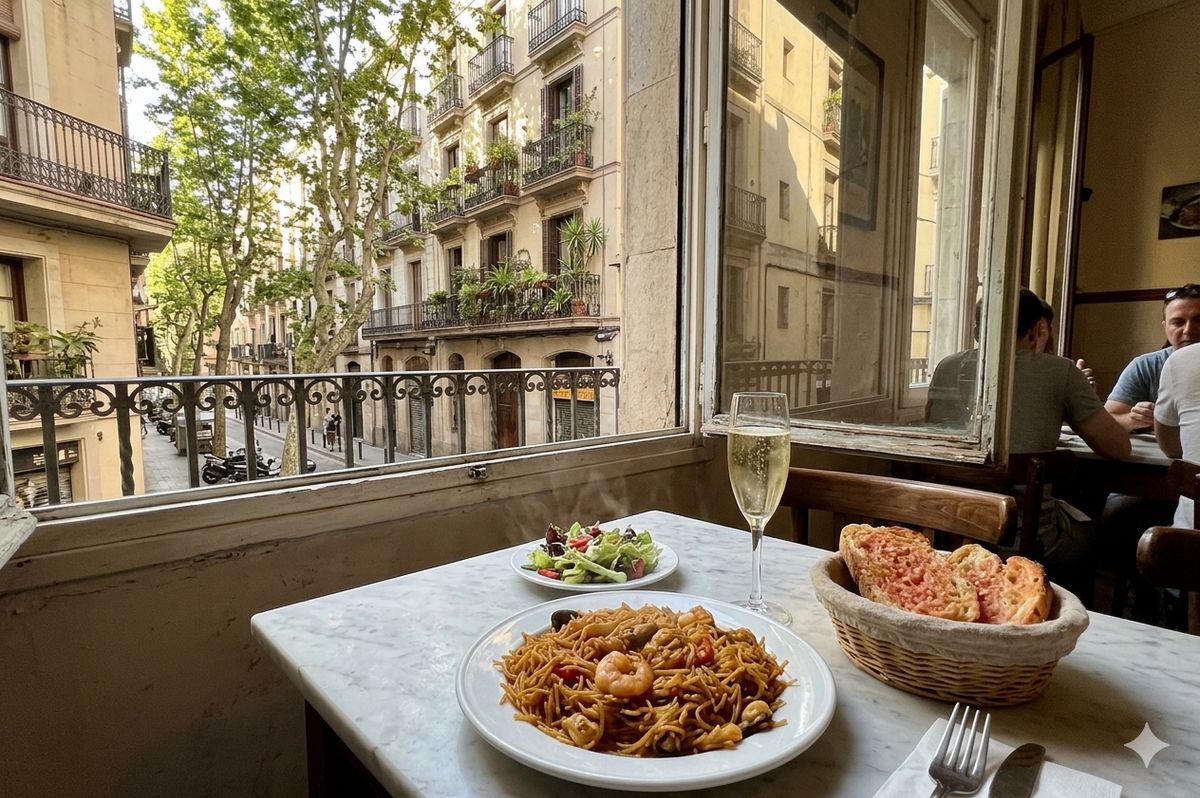
For years, "km0" was a label for expensive restaurants: a nice story on the tasting menu. In the summer of 2026 that has changed — local produce has come down to the menú del día, and nowhere is it more visible than in Barcelona.
The season's editorial slogan sums it up well: local is the new luxury. The restaurants that tell you where the produce comes from, adjust the menu to the real season and show off their suppliers are the ones filling up at lunchtime.
Why km0 and the menú del día fit so well together
Putting locally sourced produce on a €14-16 menú sounds contradictory. It's exactly the other way around: the menú del día is the km0 format by nature.
- It changes every day. A menu written each morning can cook whatever the market offers today, not what a fixed menu decided six months ago.
- Seasonal is cheaper. July tomatoes and November pumpkin cost less than their out-of-season versions. Cooking with the calendar is profitable, not a whim.
- Predictable volume. A menú restaurant knows how many covers it serves every lunchtime, and that lets it commit to a local farmer or a market stall.
With the sector's margins at record lows — we break it down in is the menú del día in danger of extinction? — km0 has also become the most honest way to justify a €16 menú without losing customers: you're not paying more for the same thing, you're paying more for better produce.
The markets are back at the center
The clearest signal of the season is in the municipal markets. At the Mercat de Santa Caterina, Parada Torres has just opened — the market counter of the Torres brothers: market cooking at everyday prices, a few meters from the stalls where they buy the produce. When a three-Michelin-star team sets up its counter inside a market, the direction of the wind is clear.
It's not an isolated case: in Poblenou, Finca Nebot has revived a 1924 casa de comidas with produce-driven Catalan cooking, and the plant-based trend — vegetarian menús built on organic seasonal produce, 100% green Catalan cooking — keeps gaining ground at the city's lunchtimes.
How to spot a genuine km0 menú del día
The "km0" label isn't regulated on the lunchtime menu, so you have to watch for the signals:
- The menu changes daily or weekly. If the menu has been the same since March, the seasonality story doesn't hold up.
- The chalkboard says specific things. "Maresme tomatoes" or "day-boat sardines" carries more weight than a generic "locally sourced produce".
- Real seasonality on the plates. Gazpachos, tomatoes and sardines in summer; mushrooms, calçots and hearty stews in winter. If there are strawberries in December, be suspicious.
- Suppliers with names. Restaurants that name their farmer, their fish market or their market stall rarely lie: the relationship is on the line.
Where to look for it in Barcelona
Neighborhoods with a strong market are the best starting point: Sant Antoni, Gràcia (Llibertat and Abaceria), el Born (Santa Caterina) and Poblenou. Our Barcelona menú del día guide has the full neighborhood-by-neighborhood map, and if budget rules, our guide to cheap menús del día has km0 options for under €13.
These are menús del día published today in Barcelona:
Today's menús del día in Barcelona

4 Latas Hostafrancs
4 Latas Granados
4 Latas Fleming

4 Latas Muntaner
4 Latas Beethoven
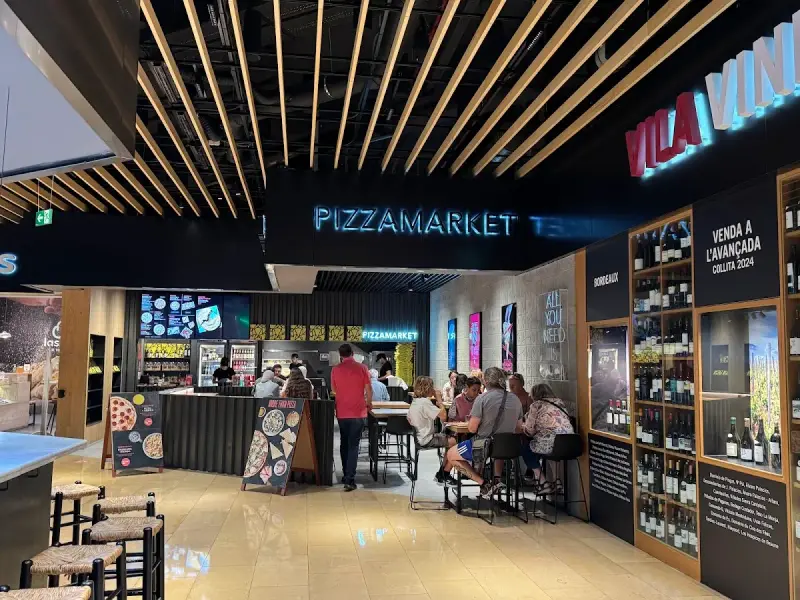
Pizzamarket Diagonal
Datos actualizados en tiempo real desde Appetece
Km0 has stopped being a talking point and become a lunchtime practice: market, season and suppliers with names, at menú prices. If the menú del día has a future — and it does — it looks a lot like this.
Want to see what's cooking today near you? Find it on Appetece — menus updated every day.